



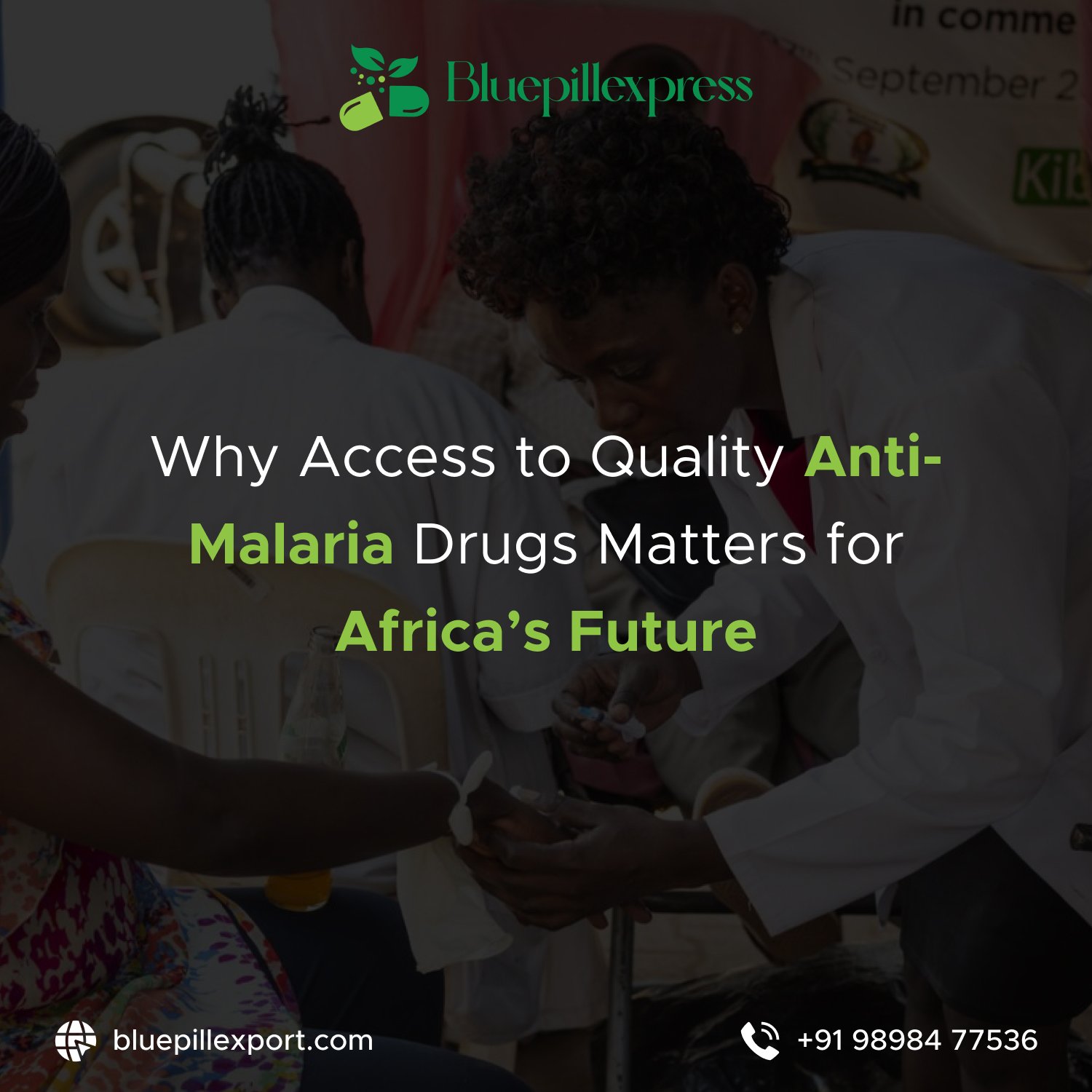
Why Access to Quality AntiMalaria Drugs Matters for Africa’s Future
 IndiaMart
 FIEO
FIEO
Malaria is not just a disease; it is a force that shapes economies, education, health systems and the daily lives of millions across Africa. Despite enormous progress over the past two decades, malaria remains overwhelmingly an African problem: the continent carries the vast majority of global cases and deaths, and small failures in treatment — poor drug supply, low-quality medicines, delayed diagnosis, or emerging resistance — have outsized consequences. Ensuring reliable access to quality-assured antimalarial medicines is therefore not a narrow health-sector objective: it is central to Africa’s economic resilience, child survival, workforce productivity, and long-term development. This article explains why access to quality antimalarials matters, the risks tied to poor access or poor-quality drugs, current threats (including resistance), and practical priorities that can protect lives and secure progress.
The scale of the problem — still enormous, still concentrated in Africa
Malaria remains one of the world’s major infectious disease burdens. According to the World Health Organization (WHO), global malaria cases numbered approximately 263 million in 2023, with an estimated 597,000 deaths that year — a figure that has remained stubbornly high despite earlier declines. The African Region bears the brunt: roughly 94–95% of malaria cases and deaths occur in Africa, and most fatalities are among young children and pregnant women. These figures are not abstract; they represent millions of missed school days, lost work, strained clinics, and families pushed deeper into poverty when a wage earner becomes ill. World Health Organization+1
Why “quality” of antimalarial drugs matters as much as availability
When people talk about access to medicines, it’s easy to think only about supply or cost. But the quality of medicines — whether they contain the right active ingredients at the right dose, packaged and stored correctly, and approved through proper regulatory channels — is equally critical. Substandard or falsified antimalarial drugs can:
- Fail to cure infections, leaving patients ill and at risk of severe disease or death.
- Increase the duration of infection, maintaining transmission chains in communities.
- Expose parasites to sub-therapeutic drug levels, accelerating the selection of resistant strains.
- Cause adverse reactions from incorrect ingredients or contaminants.
- Erode public trust in health systems and in medicine itself, discouraging people from seeking care.
Multiple studies estimate that substandard and falsified antimalarials account for a substantial, avoidable share of malaria morbidity and mortality in endemic regions — with economic and human costs that disproportionately hit the poorest households. PMC+1
Effective treatment is the cornerstone of malaria control — and that requires quality-assured ACTs
Since the early 2000s, artemisinin-based combination therapies (ACTs) have been the cornerstone for treating uncomplicated Plasmodium falciparum malaria. ACTs rapidly reduce parasite numbers and, when combined with a reliable partner drug, achieve cure rates that historically exceeded 95%. WHO guidance recommends ACTs as first-line treatment for uncomplicated malaria and injectable artesunate for severe cases. But those gains depend on the medicines being genuine, potent, dosed correctly, and taken as prescribed. If people receive fake or degraded ACTs (or inappropriate monotherapies), cure rates fall and the risk of selecting resistant parasites rises. NCBI+1
The immediate human cost of poor access and poor-quality drugs
In practical terms, poor access to quality treatment yields predictable and devastating outcomes:
- Higher child mortality. Children under five are the most vulnerable. Delays in receiving effective treatment or receiving ineffective medicine can turn a treatable infection fatal without warning.
- More severe disease and complications. Untreated or partially treated infections can progress to cerebral malaria, severe anemia, and organ failure.
- Longer transmission windows. Infections that are not promptly cured allow mosquitoes to pick up and spread parasites, increasing the community burden.
- Economic shocks to households. Medical costs, lost wages and caring responsibilities push vulnerable families into debt or force children out of school.
These are not hypothetical: epidemiological models and field studies consistently show that expanding access to effective treatments reduces deaths, hospitalizations and onward transmission. Ensuring quality is what makes those interventions work at scale. World Health Organization+1
Antimalarial drug resistance — the existential threat that quality failures accelerate
Drug resistance is the single most dangerous threat to malaria control. Artemisinin partial resistance, first observed in Southeast Asia, has now been reported in parts of East Africa. When parasites survive standard doses of artemisinin or its partner drugs, treatment fails more often; this increases severe disease and deaths, and it undermines public health investments in diagnostics, bed nets and vaccines. Resistance emerges faster when parasites are repeatedly exposed to inadequate drug concentrations — precisely the scenario created by substandard medicines, incorrect dosing, or monotherapies that do not follow treatment guidelines. This is why access to quality-assured ACTs — and strategies like rotating or deploying multiple first-line therapies strategically — are vital to slow resistance evolution. ScienceDirect+2World Health Organization+2
Health systems and supply chains: where access fails
Access to quality antimalarials breaks down in multiple ways, often concurrently:
- Weak regulation and enforcement. Limited capacity in national regulatory authorities allows poor-quality medicines to enter markets.
- Fragmented supply chains. Stock-outs at public clinics push patients to private shops where oversight is weaker and the risk of falsified drugs is higher.
- Informal markets. In many places, informal vendors are the primary source of drugs — convenient but often unregulated.
- Price barriers. Even when quality medicines exist, cost can drive patients to cheaper, non-quality-assured alternatives.
- Storage and transport issues. Heat and humidity degrade many medicines; poor cold-chain or storage practices can render otherwise quality medicines ineffective.
- Limited diagnostics. Where testing is unavailable, fevers are treated presumptively, increasing inappropriate use of antimalarials and masking other causes of fever.
Addressing these weaknesses is as much a logistics and governance challenge as a medical one. Strengthening regulatory systems, improving procurement practices, stabilizing public supply chains and subsidizing quality drugs are practical pathways to close these gaps. BioMed Central+1
Economic and social returns from investing in quality treatment
Investing in reliable access to quality antimalarials delivers measurable returns:
- Reduced healthcare costs over time. Effective early treatment lowers hospitalization rates and the need for more expensive care.
- Increased productivity. Healthy adults and fewer school absences for children translate into higher lifetime earnings and economic output.
- Stronger human capital. Fewer malaria episodes in childhood improve cognitive development and educational attainment.
- Resilience to shocks. Communities and health systems that can reliably treat malaria are better placed to absorb and respond to epidemics, climate-related malaria surges, or humanitarian crises.
Analyses of malaria control consistently show that every dollar spent on effective prevention and treatment yields multiple dollars in economic benefit. The key qualifier is “effective”: the benefit accrues only if medicines work as intended. African Leaders Malaria Alliance
The role of diagnostics: access to quality drugs must go hand-in-hand with testing
Giving antimalarials without a confirmed diagnosis has costs. Rapid diagnostic tests (RDTs) and microscopy allow health workers to distinguish malaria from other febrile illnesses and reserve ACTs for confirmed cases. This preserves drug effectiveness, reduces unnecessary use (which fuels resistance), and redirects patients with other infections to the right care. Scaling up RDT availability, training providers, and incentivizing test-and-treat behaviors are therefore inseparable from strategies to expand access to quality medicines. World Health Organization
Policy and programmatic responses — what is already being done
International agencies, national governments and partners are not standing still. Recent WHO-led meetings and regional initiatives have prioritized surveillance for drug resistance, strengthened supply chain oversight, and promoted strategies like multiple first-line therapies and targeted use of triple-combination therapies in high-risk areas. Several African countries have piloted or scaled up measures to diversify first-line treatments, intensify pharmacovigilance, and crack down on falsified medicines. These efforts show both urgency and pragmatism — but they require sustained funding, technical capacity, cross-border coordination and community engagement to be effective. World Health Organization+2PMC+2
Practical priorities to secure access to quality antimalarials
To protect progress and build a malaria-resilient future, policymakers and partners should prioritize:
- Strengthen national regulatory authorities. Train staff, modernize laboratories, expand market surveillance and streamline registration processes for quality-assured products.
- Close supply-chain gaps. Invest in forecasting, procurement transparency, warehousing, and distribution systems so clinics never run out of quality ACTs.
- Crack down on falsified and substandard products. Use risk-based inspections, test purchases, and rapid screening technologies; prosecute criminal networks that traffic fake medicines.
- Subsidize quality-assured medicines in private markets. Where public clinics are limited, subsidies or social marketing can make quality products affordable in pharmacies and accredited outlets.
- Scale diagnostics and integrate care. Make RDTs routine at frontline facilities and train providers to follow test results — preserving ACTs for confirmed cases.
- Expand surveillance for resistance and treatment efficacy. Routine therapeutic efficacy studies and molecular surveillance detect resistance early and inform policy changes.
- Promote rational drug use and community awareness. Educate communities about completing full treatment courses and the dangers of informal or cheap sources.
- Support local manufacturing with quality standards. Where feasible, build regional pharmaceutical capacity with WHO prequalification or stringent regulatory oversight to reduce dependence on distant suppliers.
- Secure predictable financing. Donor funding, domestic budget lines, and innovative financing (health bonds, pooled procurement) are needed to sustain interventions.
- Coordinate regionally. Parasites and resistant strains cross borders easily; regional collaboration on surveillance, procurement and regulatory harmonization is essential.
Each of these actions is technically feasible but politically and operationally demanding. The pay-off, however, is enormous: saved lives, less resistance, and more productive societies.
The equity imperative: poor and rural populations pay the highest cost
Substandard medicines and weak access hit the poorest the hardest. Informal vendors and rural drug shops — often the most accessible care providers — are also the most likely venues for low-quality products. Women and children in remote areas face compounded barriers: cost, distance, lack of health information, and fewer staffed clinics. Equity-focused approaches (mobile clinics, community health worker programs with reliable supplies, targeted subsidies) are therefore not optional; they are essential components of any credible access strategy. Rethink Priorities+1
The research and innovation agenda: new tools — but only if they reach people
Scientific advances — from new drug combinations to longer-lasting bed nets and vaccines — provide hope. However, their potential will be squandered unless paired with systems that deliver quality products at scale. Innovations that reduce the pill burden, improve adherence, or combine drugs to delay resistance are promising; the same goes for field-deployable tests for drug potency and resistance markers. But innovation must be matched by investments in regulatory pathways, procurement, and community-level delivery. Nature+1
What donors, governments and civil society can do today
- Donors should fund sustained health-system strengthening — not just vertical commodity purchases — and support regional surveillance networks.
- Governments must prioritize resilient procurement and fund national regulatory agencies adequately; they should also integrate anti-falsification units within police and customs operations.
- Civil society and professional associations should educate communities, monitor medicine quality, and advocate for transparent procurement.
- Private sector actors, including legitimate pharmaceutical distributors and pharmacies, must commit to traceability and only stock quality-assured products, while working with regulators to improve compliance.
Accountability matters: clear metrics (stock-out rates, therapeutic efficacy, prevalence of substandard products, RDT coverage) and public reporting accelerate progress.
A warning, and a call to action
Two uncomfortable truths must be acknowledged. First, the emergence and spread of antimalarial resistance could rapidly erase decades of gains; second, the cheapest option today (buying cheaper, unverified medicines) is almost always the most expensive option long-term. Tackling these problems requires political will, money, technical capacity and cross-sectoral collaboration — but the alternative is a future in which malaria again becomes a leading cause of childhood death and a chronic brake on African development.
Conclusion — more than a health intervention: a foundation for a prosperous future
Access to quality antimalarial drugs is not a niche technical goal; it is a foundational investment in Africa’s future. It protects the lives of children and caregivers, reduces poverty caused by health shocks, sustains productivity, preserves the effectiveness of core public health tools, and keeps progress toward elimination within reach. Policymakers, funders, health professionals and communities must treat medicine quality and reliable access as nonnegotiable priorities. With coordinated action — from strengthening regulatory systems and supply chains to expanding diagnostics and financing — Africa can turn the current challenges into an opportunity: to build stronger health systems, slow the march of resistance, and accelerate the path to a malaria-resilient continent.